
The Versatile Vizsla: More Than a Hunting Dog

When we talk about a Vizsla being versatile, we mean a dog that can excel in many areas without losing sight of what the breed was created to do.
The Vizsla is far more than a pretty face or a devoted companion. It is a purpose-bred working dog with the athleticism, intelligence, natural ability, and desire to work alongside its handler. The same dog that spends the morning hunting birds can spend the afternoon training, competing, hiking, or simply relaxing with the family.
That ability to adapt while still maintaining the characteristics that define the breed is what makes the Vizsla so special.
The Many Roles of a Vizsla
Vizslas are intelligent, athletic, people-oriented dogs with a strong desire to work. Those qualities allow them to succeed in a variety of activities and environments.
Hunting Partner
The Vizsla's foundation is as a versatile hunting dog.
Developed in Hungary, the breed was valued for its ability to hunt, point, retrieve, and work closely with its handler. A good hunting dog needs more than enthusiasm. Natural bird sense, a good nose, stamina, trainability, and the desire to search and work are all important.
Training can develop and refine those instincts, but natural ability matters. You can't train into a dog something that simply isn't there genetically.

Performance and Competition
The breed's abilities aren't limited to the field.
Vizslas can compete in conformation, obedience, rally, tracking, agility, and other performance events. These activities allow owners to develop different aspects of their dog's abilities while building communication and teamwork.
Titles aren't the sole measure of a good dog, but they can provide valuable information. Depending on the venue, they can demonstrate trainability, structure, work ethic, focus, and a willingness to perform.
Family Companion
Being a working dog doesn't mean a Vizsla can't be a wonderful family companion.
One of the breed's greatest strengths is its connection to people. They want to be involved in what their families are doing, whether that means accompanying them on an outdoor adventure or settling beside them at home.
A well-rounded dog should be able to understand that there is a time to work and a time to relax. That balance doesn't happen automatically. Genetics provide the foundation, while socialization, training, maturity, and the individual dog's experiences all play a role.

What Makes a Good All-Around Vizsla?
Several qualities come together to produce a dog capable of succeeding in different roles.
Structure and Athletic Ability
A Vizsla should have functional structure that allows it to move efficiently and work comfortably.
Athleticism isn't simply about speed or having endless energy. A working dog needs balance, coordination, endurance, and physical soundness.
Those same qualities benefit a dog whether it is covering ground in the field, competing in a performance event, hiking with its family, or enjoying an active lifestyle.
Natural Ability
Natural ability is one of the most important pieces of the equation.
Bird sense, nose, pointing instinct, retrieving ability, stamina, and a desire to hunt are characteristics that should be valued when evaluating breeding stock.
Good training can bring those qualities out and help a dog learn how to use them, but the foundation begins with genetics.
Temperament
The ideal Vizsla is confident without being aggressive, curious without being reckless, and sensitive without lacking resilience.
They tend to be highly connected to their handlers and responsive to direction. That sensitivity can be a tremendous advantage when it is paired with confidence and a willingness to learn.
A dog that can enter a new environment, take direction, focus on its job, and then settle afterward is much easier to live with and work with.
Trainability
Intelligence is only part of trainability. A dog also needs the desire to cooperate with its handler.
The ability to learn, solve problems, maintain focus, and respond appropriately is useful whether the dog is in the field, the show ring, a training class, or the family home.
The goal isn't to suppress a dog's drive. It is to teach the dog how to channel it.
Training and Socialization
Genetics provide the foundation, but development matters.
Early socialization gives a young Vizsla experience with different people, environments, sounds, surfaces, and situations. Training teaches the dog how to respond appropriately and builds communication between dog and handler.
For an active working breed, an important part of training is teaching an off switch.
We want dogs that are excited and focused when there is a job to do, but capable of settling when the work is finished.
That balance is one of the qualities that makes a dog enjoyable to live with.
More Than a Collection of Titles
Titles and accomplishments can tell us a great deal about a dog, but they don't tell the entire story. A ribbon doesn't tell you everything about temperament. A field title doesn't automatically tell you how a dog behaves in the house. A beautiful show dog isn't necessarily a proven hunting dog.
When evaluating a breeding prospect, we believe it is important to look at the whole dog.
How does the dog hunt?
How does it move?
How does it learn?
How does it handle new situations?
How does it interact with people?
Can it settle in the house?
Does it have the physical structure to perform?
Does it have the temperament and natural ability we want to pass forward?
Those questions become much more meaningful when considered together.
Why This Matters in Breeding
For us, the goal isn't to produce dogs that are good at only one thing.
We value Vizslas that can demonstrate their abilities in the field, in competition, in training, and in everyday life. Health, structure, temperament, natural ability, trainability, and performance all have a place in evaluating a breeding dog.
No single title or accomplishment tells the whole story.
The bigger picture does.
Thoughtful breeding means considering what each dog brings to the next generation and whether those qualities complement the strengths and weaknesses of the other side of the pedigree.
That is how we work toward producing dogs that are capable, functional, biddable, and enjoyable to live with.
Living With an Active Working Breed
A Vizsla needs opportunities to use both its body and its mind.
Regular exercise might include hunting, running, hiking, swimming, retrieving, or other activities appropriate for the individual dog's age and development.
Mental stimulation is equally important. Training, scent work, retrieving games, problem-solving activities, and learning new skills can help satisfy their natural desire to work.
And perhaps most importantly, they need time with their people.
The Vizsla was bred to work alongside its handler, and that partnership doesn't end when the field work is over.
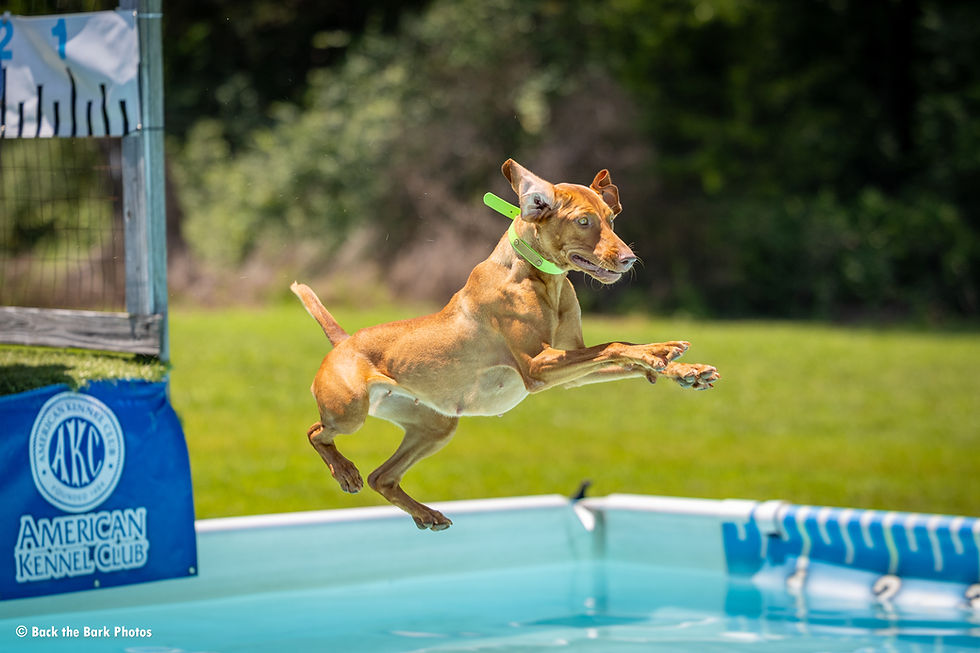
The All-Around Vizsla
The beauty of the breed is that you don't necessarily have to choose.
The same dog can point birds in the field, earn titles, learn obedience, go hiking, play with the family, and then curl up on the couch at the end of the day.
That doesn't happen by accident.
It comes from thoughtful breeding, sound genetics, proper socialization, consistent training, and giving a dog opportunities to develop and use its natural abilities.
A Vizsla should be more than a pretty face or a collection of titles. We want dogs with the ability to do the work they were bred for, the structure and temperament to perform it, and the character to be wonderful companions when the work is done.

That's what we mean when we talk about a truly versatile Vizsla.

Comments